Cilantro on the Side Please
What my hatred of cilantro taught me about empathy and mentalizing

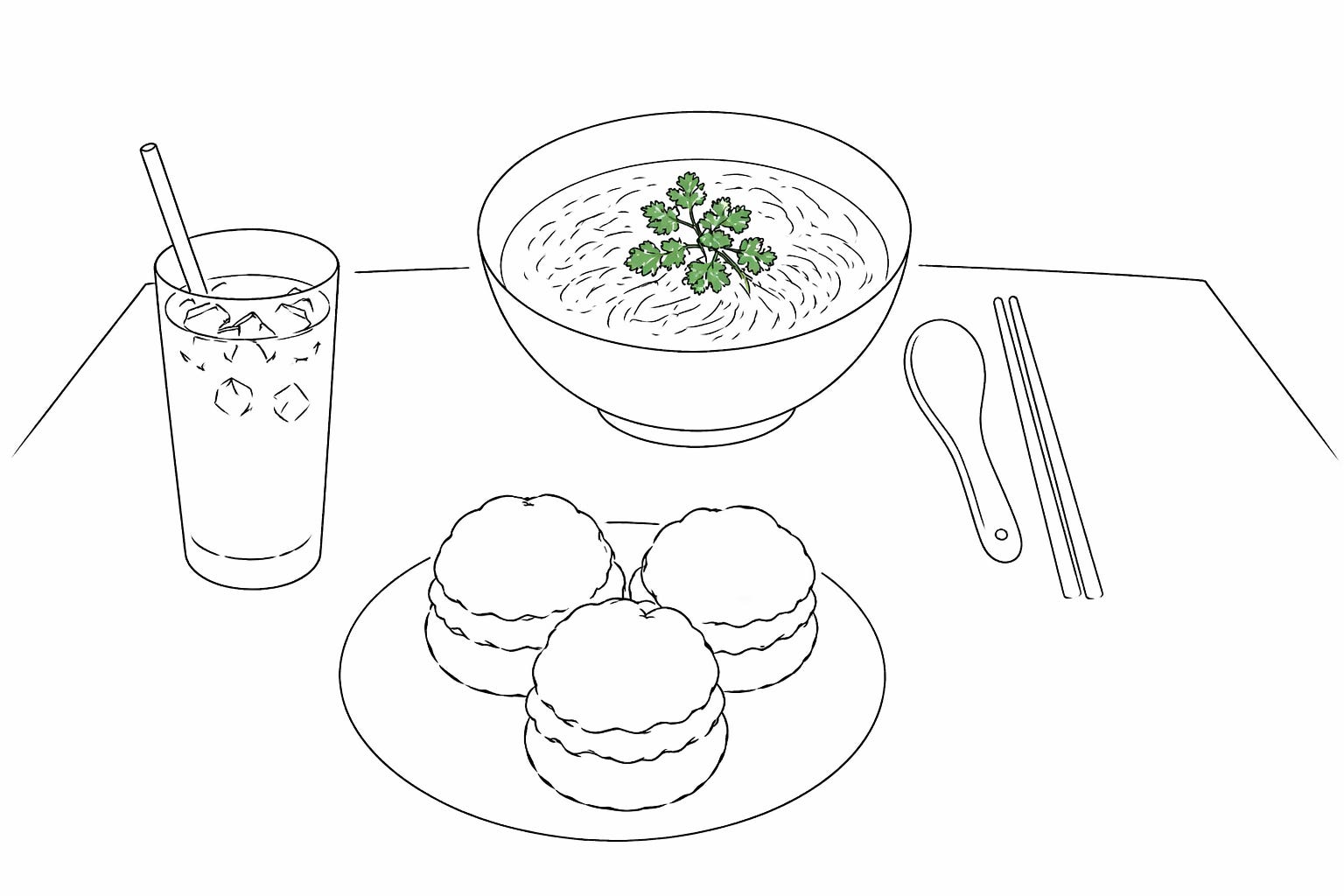
At a recent social gathering, the ice breaker question was “what’s the smallest hill you are willing to die on.” While the first person was still talking, I already knew my answer. “Cilantro does not belong in food,” I said, and if it has to be in a dish at a restaurant, it definitely needs to be on the ingredient list.
People chuckled. The host said I was clearly passionate about the subject. I gave a short explanation and we moved on to the next person. My brain didn’t move on.
Cilantro may be the most divisive herb in the world. For some people it’s the best one on the planet, bright, fresh, and irreplaceable. For others a visceral sense of revulsion and hatred. There’s a genetic explanation for why some of us experience it this way. A gene called OR6A2 codes for an olfactory receptor that makes certain people acutely sensitive to the aldehyde compounds in cilantro, the ones that smell fresh and citrusy to some and essentially indistinguishable from soap to others. The sensitivity is thought to relate to an evolutionary aversion to spoiled foods and rancid fats, a protective mechanism that, in the case of cilantro, has misfired. Estimates suggest somewhere between 3% and 21% of people dislike it, with higher rates in East Asian and European populations and lower rates in South Asian, Hispanic, and Middle Eastern populations. I don’t know my own genotype, but I’ve hated it for as long as I can remember. Smelling it across the produce aisle is enough to make me pinch my nose. Finding it on a plate after I’ve specifically asked for it not to be there raises my stress level in a way that I’ll acknowledge is slightly disproportionate to the situation. The special comments field on every OpenTable and Resy reservation I make has exactly one pre-populated entry.
The first person I lived with after college loved Vietnamese pho, and cilantro was part of what made it his favorite. I would go with him to his favorite pho place, a restaurant that served only pho and cream puffs, try to enjoy cilantro free pho without success, and end up with iced coffee and cream puffs while he enjoyed his pho.
Cilantro wasn’t the only difference in how we saw food, as I learned a lot from navigating that disconnect, even if sometimes the understanding came years later on reflection. Sometimes I would make an elaborate meal for us and he would say he would have been just as happy with tuna, rice, and peas. My visceral reaction to that suggestion was immediate. The dish sounded utterly disgusting to me. What I didn’t understand then was that it was a childhood favorite of his, a comfort food that carried real meaning. We were talking completely past each other, and neither of us had the tools to see it.
That gap showed up in other ways.
When we do things for people that they didn’t ask for, because those things are meaningful to us, it is easy to feel hurt when the gesture doesn’t land the way we hoped. The question is whether our reaction is as justified as it feels in the moment. Often we are making assumptions about other people’s mental states based on our own wants and needs. At the same time, if the other person could mentalize the effort and emotion behind the gesture rather than just their own experience of it, they might respond in a way that felt more like being seen, while still being honest.
At the time I didn’t have the tools to really understand his perspective, and I’ve since come to be much kinder to my younger self for missing things. Learning skills for the present doesn’t mean we should be too harsh on our past selves for not knowing them.
How we exist in the world and how we relate to other people is something I think about a lot. It permeates not just my work but so many other facets of my life. In my last piece, I wrote about theory of mind, the understanding that other people don’t just have different opinions, they have genuinely different inner experiences. The more I learn, the breadth of how differently each of us actually experiences the world, right down to the most basic sensory level is truly astounding. How we make sense of those differences while still getting through the day is the more interesting question.
It’s easy to tell ourselves that people are different from us, but really knowing and feeling just how different takes effort. If theory of mind is the first step on the human relationship skill path, mentalizing is the level up that really utilizes that understanding to its fullest.
The concept of mentalizing was developed and formalized by psychoanalysts Peter Fonagy and Anthony Bateman. It is the process by which we interpret and understand the emotional state of another person. It goes beyond basic empathy and learning it can help people heal from trauma, and build deeper connections with the people closest to them. It can also help each of us take a step back and be less self conscious. For those who really struggle with relationships, such as those with borderline personality disorder, Mentalization-Based Treatment was developed as a structured therapeutic approach to teach this skill. But mentalizing isn’t only a clinical tool, and its value doesn’t stop at any single diagnosis. Better mentalizing can shift how we navigate all kinds of situations where we routinely misread other people, or assume they are far more focused on us than they actually are, which is known as the spotlight effect and likely the topic of a future post.
One of the clearest everyday examples of failed mentalizing is the way we interpret other people’s behavior through the lens of what that behavior would mean if we did it. If I didn’t return a message it would be deliberate. If I arrived late it would mean I wasn’t interested. If I said something it would be because I believed it. We take our own internal logic and quietly apply it to everyone else, which works fine when people think the way we do and quietly causes damage when they don’t.
I see this often with people who have ADHD. The relationship between ADHD and time, organization, and memory doesn’t work the way it does for most people. (As you’ve probably guessed, more to follow in a future post.) For someone who writes everything down, sets multiple reminders, and still arrives early, it can feel genuinely baffling that someone else could miss an important appointment and still truly, deeply care about the person they were supposed to meet. The person with ADHD is often carrying real shame about it, fear that they’ve hurt someone they love, remorse that arrives after the fact and doesn’t always know how to find its way into words. And the person on the other side is sometimes so convinced that lateness means carelessness that they can’t quite receive the remorse when it comes. Both experiences are real. The mentalizing failure is in assuming that the same behavior carries the same meaning across two very different nervous systems.
How we experience food and whether we can eat certain things at all can stir up surprisingly strong feelings. Parents have been known to get very upset at schools when they learn that a child’s life threatening allergy might change what their own kid gets to put in their lunch box. Planning a group dinner can feel like a project when you’re trying to find somewhere that can accommodate everyone’s needs and preferences. These aren’t unreasonable frustrations. So how do we step beyond our own concerns to start caring for the needs and feelings of others, even when they might be in conflict with our own? How much do we actually understand about what it’s like to move through the world in someone else’s body? And does it actually matter if we can or can’t get close to someone else’s experience?
According to developmental psychology, most children start to build basic empathy somewhere between the ages of 3 and 5. In medical school it is often taught as a more explicit construct, as part of the soft skills of being a doctor, or during psychiatry and palliative care rotations. Sympathy is the acknowledgment of another person’s emotional experience from your own frame of reference. You recognize that someone is suffering and you feel concern for them, but you remain in your own emotional position. Empathy is the attempt to understand another person’s feelings by taking their perspective rather than observing it from the outside. It doesn’t require us to have lived their experience, only to make a genuine effort to understand it and respond to what they actually need rather than what we imagine we would need in their place. Researcher and author Brené Brown captures something essential about the difference: sympathy is looking down into a hole where someone is stuck and saying something like “wow, that looks bad, want a sandwich?” Empathy is climbing down and saying “I know what it’s like down here, and you’re not alone.”
But even empathy has its limits. It doesn’t always tell us why one person thanks us for climbing down, and another throws the sandwich back in our face. That’s where mentalizing comes in.
A friend of mine in medical school was allergic to red dye. Avoiding it sounds simple until you start looking. I found myself reading labels on cleaning products I had never thought twice about before. Many products that appear completely clear still contain red dye, and the dye itself is often derived from insects, which is part of why some people react to it. I hadn’t known any of that before I met her. I hadn’t needed to.
Her reality gave me a different perspective.
But why someone has an allergy is almost beside the point when you’re the one living with it, or loving someone who is.
Of course there are people who are wildly successful despite a seeming lack of empathy. Those traits show up more often than we might expect in positions of significant power, including CEOs and world leaders, and can shape environments that feel cold and uncaring. The dark triad of personality traits, along with sociopathy and psychopathy, is worth exploring further.
But most of us aren’t operating at those extremes. Most of us are somewhere in the middle, trying to figure out how to respond to other people’s pain or difference in a way that lands right, and getting it wrong sometimes in ways we don’t even realize.
Sometimes we get it wrong because we haven’t had enough experience with someone else’s reality to know better. Or we just don’t know what to say to make a person feel better in a given situation.
I have a friend who for a significant period of time, along with his children, had severe reactions to multiple food categories. Then, almost incidentally, while being treated for something else entirely, the reactions went away. He could eat again. When I talked to his wife about it afterward she said something that I’ve continued to think about. She hadn’t even realized how much stress she had been carrying every single day, reading labels, asking questions, planning around what was safe, until the moment that stress suddenly lifted. It had just become the texture of their lives.
When they visited my house before that happened, I did my best. I cleaned all the surfaces in my kitchen, put away the cast iron pans, made sure nothing was left out that could be a problem. For that weekend we mostly ate food they had brought with them, because they already knew what was safe and I didn’t. As someone who loves to cook, who finds real joy in feeding people, that was humbling. I had the desire to take care of them and I didn’t have the tools. Their everyday world required a fluency I simply hadn’t built.
Out to lunch, as he listed off the ingredients he couldn’t eat the waitress said simply “that must really suck.” “It does,” he said. Later he reflected that it felt good to have it acknowledged so directly.
Before that weekend I could sympathize with their experience but I couldn’t really empathize, because I didn’t have enough of a reference frame. I knew it was hard. I didn’t know what hard felt like from the inside of it.
I think about this sometimes on airplanes, when the announcement comes that there will be no peanut products served on the flight due to a passenger allergy. There’s always a small ripple of adjustment. For most people it’s a minor inconvenience. For one person on that plane it might be the difference between landing safely and a medical emergency. The math is obvious when you step back. But in the moment the minor inconvenience is immediate and the life threatening allergy belongs to someone else’s body, someone else’s nervous system, someone else’s daily reality. It’s easy to be self centered and take our own preferences as the truth of the world. As I wrote about in my first post, we are all different creatures, navigating from inside our own experience, which is the only one we have direct access to.
Grief and loss work the same way. Without having lost someone close it can be extremely difficult to have real empathy for what others have been through. In my work as a psychiatrist I regularly sit with people whose experiences of trauma are far outside my own frame of reference. What I’ve learned is that in those moments you don’t always try to meet someone inside their specific experience. Sometimes you connect over more fundamental human emotions, the ones that don’t require a shared history to recognize. Fear. Longing. The wish that things had gone differently.
Many people who have been through significant trauma also have difficulty naming their own emotions, a phenomenon called alexithymia. Part of the work of therapy is helping build a more nuanced emotional vocabulary, one that has more shades than just angry, scared, sad, or anxious. Learning to name what you feel is its own kind of bridge, both toward yourself and toward other people.
Failure to mentalize doesn’t just show up in our personal relationships. It can shape how we see people who don’t look like us, or who don’t fit the mold we’ve been trained to expect. In medicine, research has shown that Black residents are pushed out of competitive specialties at far higher rates than their white peers, often on the basis of subjective evaluations citing things like professionalism, temperament, or cultural fit, categories that tend to reflect the values of whoever is doing the evaluating. A 2022 STAT investigation found that the word professionalism in particular functions as what one researcher called a hidden curriculum, its standards shaped largely by white men in positions of authority. When we don’t do the work of building a real mental model of who someone actually is, we reach for a stereotype instead. And when a person doesn’t conform to that stereotype, we can judge them more harshly than we would someone whose behavior we’ve made more effort to understand. How mentalizing fails along lines of race and gender is a topic that deserves its own full treatment. I’ll be coming back to it.
Mentalizing more isn’t always straightforwardly better, and I want to sit with that for a moment. John Elder Robison, who writes beautifully about his experience with autism, participated in a Harvard study using transcranial magnetic stimulation, a noninvasive form of brain stimulation, that researchers hoped might help people on the spectrum read emotions more readily. For Robison it worked dramatically. He describes the experience in his memoir Switched On. What he hadn’t anticipated was what that new awareness would cost him. His wife had been living with chronic depression, something he had largely been unaware of before the treatment. Afterward he felt the full weight of her sadness, and the relationship couldn’t hold it. They separated within a year. Two people had built a life together that worked within certain limits. When those limits changed overnight, the equilibrium was gone. It’s a story that stays with me, because it complicates the easy assumption that more empathy, more mentalizing, is always the goal. Sometimes the question is not just how much can I feel of someone else’s experience, but what do I do with it once I can.
A few years ago I reconnected with a friend I hadn’t spoken to in several years. When he picked up I immediately started with an apology. I’m sorry I’ve been so bad at staying in touch. He stopped me before I could finish. Kat, you don’t need to apologize, he said. I also haven’t called you. We can both do better going forward.
What struck me afterward was where my failure had actually been. I hadn’t thought badly of him for not calling. I’d assumed he was busy living his life, the same way I was living mine. But I hadn’t trusted that he would extend me the same assumption. I projected onto him a judgment he wasn’t making. He had been mentalizing me accurately all along. I just hadn’t been doing the same for myself.
That conversation helped me grow. The difficulty is that we tend to minimize emotional pain the same way we minimize physical pain. Over-apologizing, bracing for judgment, assuming others will view us as critically as we view ourselves, these can be protective. If you’ve already imagined the worst reaction and prepared for it, the blow is softer if it comes. But it also means we sometimes borrow suffering that was never going to arrive.
The question worth sitting with is how do we know when that fear is actually grounded. One thing that helps me is a thought exercise that draws on everything theory of mind and mentalizing ask of us. How well do I actually know this person, and based on that, how do I imagine they would respond? If I don’t know them well enough to answer that, I ask myself how I would respond if a friend came to me with the same thing. And then, having done that work, what is the worst realistic thing they could think, say, or do. Not the catastrophic version. The realistic one. More often than not, the answer is considerably gentler than the story I’d been telling myself.
Mentalizing takes a lot of work. Some people seem to be naturally better at it than others, but the truth is most of us have room for improvement. For all that we yearn to be understood, the people in our lives are no different. When someone makes the genuine effort to see us as we truly are, rather than who they fear or need us to be, it makes us feel emotionally held and cared for. When done right, it makes us feel seen.
Good mentalizing doesn’t have to be profound. Sometimes it’s just letting someone know that what you’re experiencing makes sense, even if I don’t feel it too.
I have an experience with allergies and theory of mind that weighs heavily on me.
When my son turned one, he had some facial swelling from an allergic reaction that brought us to the ED. Even a minor reaction requires a trip - the risk of anaphylaxis is too high for an infant. Plus, at that age, he can’t articulate when his airway is closing.
Over the next two years, we went through a number of allergic episodes. Maybe two or three more ED visits and a whole lot of trial and error before the allergist told us his allergy was likely sesame.
This was anxiety-inducing for my wife, who is an ICU nurse and has seen some of the worst conditions a human can go through. The thought of an allergic reaction threatening our son’s life created a really tough eating environment over the next few years. We couldn’t go to certain restaurants. We expunged all types of ingredients from our house. Every label was thoroughly vetted and read. She wouldn’t even eat certain food products because she was still breastfeeding our one-year-old. Fear of passing on allergens meant our diets changed too.
My belief was in the opposite direction. I believed in the “hygiene hypothesis” - the idea that early-and-often exposure led to developing the appropriate immune response. This led to a lot of tension between me and my wife because I had a mental model of her as an overprotective mom, and she had a mental model of me as an overconfident and reckless dad.
What was weighing on me was the stress of checking labels, of expunging our pantry, of picking restaurants based on their allergy policies, and of facing rejection for meals I’d painstakingly prepared (I’m also a wonderful chef, and I cared a lot about making food for people I love).
This has been an undercurrent of our marriage and parenting for a couple of years now. And although I’m pleased to say my son is no longer allergic to sesame, my wife and I still get a visceral reaction when it comes to making decisions about our kids’ safety.